A house with a field may include land you cannot buy or use as you planned
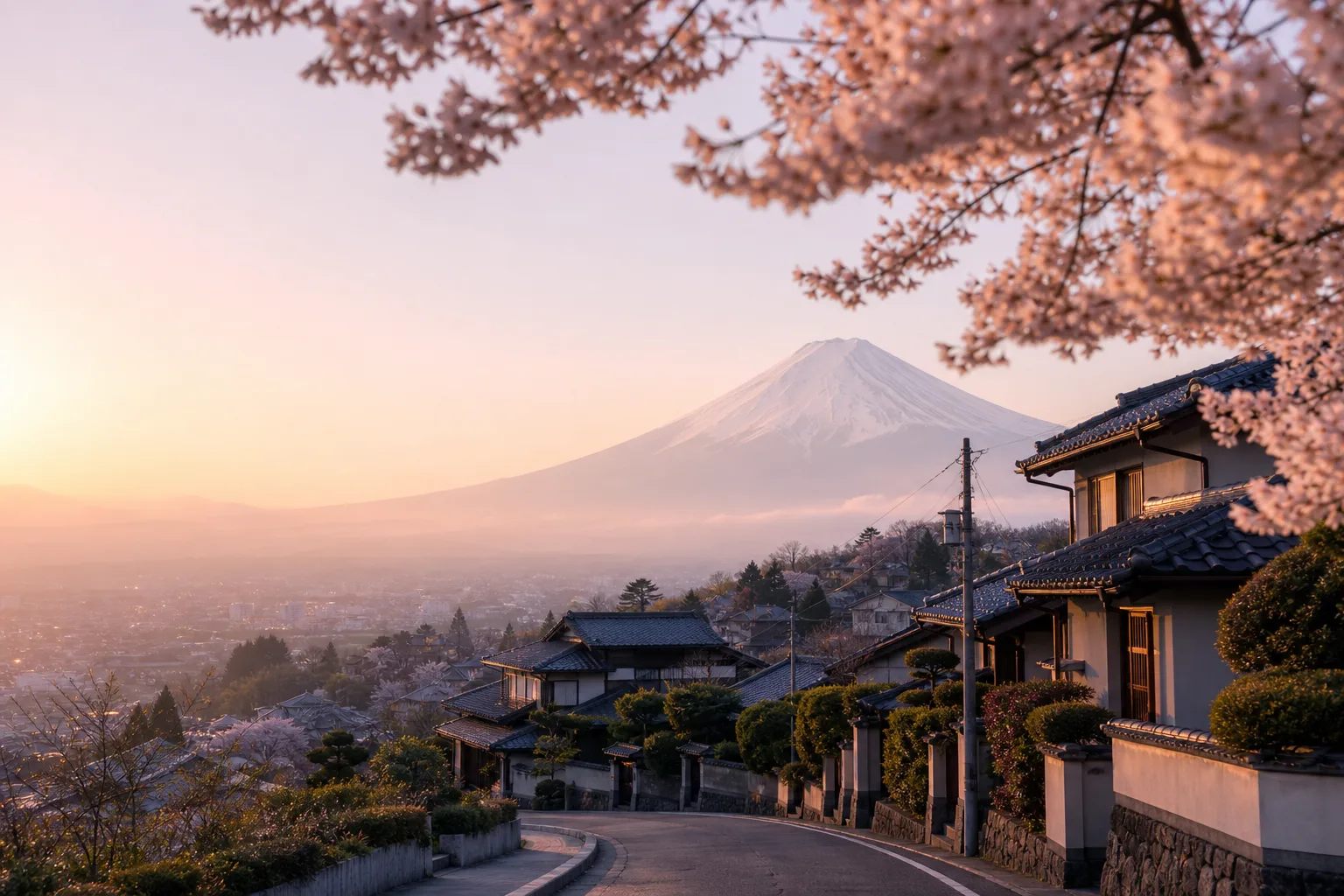
A rural Japanese house with a green field beside it can look like the complete package. You may picture a vegetable garden, fruit trees, a few chickens, or simply more privacy around the house.
Before you treat that field as part of your future yard, ask one question:
Is it residential land, or is it legally classified as farmland?
That distinction can affect whether you can buy the parcel, what you can do with it, and whether the sale can move forward at all.
For many overseas buyers, the house is straightforward. The field beside it is where the real due diligence begins. The first step is to separate what looks included in the listing from what you can actually acquire and use.
Before you proceed
Quick answer
A field beside an akiya may be included in the sale, but that does not mean you can automatically buy it, use it as a private yard, or convert it to another purpose.
What to establish first
Check whether each parcel is residential land or legally classified as farmland. If farmland is involved, you may need approval to acquire it, separate permission to change its use, or both. The outcome can also depend on the parcel's location and the local agricultural committee's review.
1Identify whether the listing includes separate residential and farmland parcels.
2Confirm whether neglected or overgrown land is still legally treated as farmland.
3Separate the question of buying farmland from the question of converting it to another use.
4Check for agricultural-use zones that can make conversion harder.
5Ask parcel-level questions before spending money on reports, travel, or an offer.
To understand why this issue can affect a property purchase, it helps to start with how Japan treats agricultural land.
Why the rule exists
Why farmland is treated differently in Japan
Japan has limited agricultural land, and policy is designed to retain land for agriculture rather than treat it as ordinary vacant land waiting for a new use.
The practical distinction
The Ministry of Agriculture, Forestry and Fisheries (MAFF) reported about 4.27 million hectares of farmland in 2024. Current policy aims to retain 4.12 million hectares by 2030 as part of Japan's domestic food-production and food-security planning.
For buyers, this means a field attached to an akiya may be subject to rules that do not apply to the house or its residential lot. Conversion to housing, parking, commercial use, and other non-agricultural uses is controlled.
That policy matters at the parcel level, where one rural listing can combine land with very different legal statuses.
Parcel check
One property can include several very different parcels
A listing photo can make a house, garden, and field look like one continuous property. Legally, they may be separate parcels with different classifications.
Read the land parcel by parcel
The land under and immediately around the house may be 宅地 (takuchi), meaning residential land. The neighboring field may be 農地 (nōchi), meaning farmland. A continuous-looking yard does not change each parcel's legal status.
□Which parcels are included in the sale?
□What is the registered or legally relevant classification of each parcel?
□What use is allowed for each parcel?
The visual condition of the land can make this easy to miss, especially when a field has not been actively cultivated for years.
Do not judge by appearance
An overgrown field can still be farmland
Weeds, fruit trees, an old shed, or years without cultivation do not automatically turn farmland into ordinary vacant land.
Check legal status, not the view
MAFF guidance indicates that land may still be treated as farmland when it is not currently cultivated if it is objectively capable of cultivation. An overgrown field beside an akiya is not automatically an oversized garden.
Imagine a buyer who sees grass, a few fruit trees, and an old shed behind a house. The listing calls it a large garden. Parcel records later show that much of the open land is farmland. The buyer's plan now depends on rules that were not obvious from the photographs.
Free Member Tool · about 2 minutes
What can your budget actually buy in Japan?
Answer 11 quick questions. Your free Snapshot shows where your budget works in Japan, how many listings match it today, and what to adjust to unlock more options.
50,000+ members·Rated 4.8/5 by verified buyers·No credit card
Once a parcel is identified as farmland, the next question is whether it can be transferred to you at all.
Acquisition rules
Buying farmland is different from buying a yard
A transfer of rights to farmland, including ownership, generally requires approval from the relevant agricultural committee under Article 3 of the Agricultural Land Act.
What the committee considers
The committee is not simply checking whether the buyer can afford the land. It considers whether the buyer can use the farmland appropriately and whether the acquisition would affect surrounding agricultural land.
✓Whether the farmland will be used efficiently.
✓Whether the buyer can carry out the required agricultural work.
✓Whether the acquisition would interfere with local agricultural use.
This is often described as a nationality issue. The actual question is more specific, and more closely tied to how the land will be used.
Eligibility and intended use
The issue is agricultural use, not nationality alone
It is too simple to say that foreigners cannot buy farmland in Japan. The practical issue is whether the buyer can meet the requirements for the particular land and intended use.
What the data shows
Foreign residents of Japan can acquire farmland when they meet the applicable requirements. MAFF's 2024 statistics recorded 377 acquisitions by foreign residents, covering about 95 hectares.
The same statistics recorded zero acquisitions by foreign individuals living overseas in 2024. Since 2017, MAFF recorded one acquisition by an overseas-resident foreign individual, covering 0.1 hectares.
The buyer question: Can I meet the requirements for this particular farmland, in this municipality, for the use I actually intend?
Older guidance can make the process sound more straightforward than it is, particularly when it relies on rules that have changed.
Current rule
The old 50-are rule is no longer the national rule
Older English-language articles may still refer to a national minimum-area requirement that no longer applies.
Put the former threshold in context
An are is 100 square meters. Fifty ares equals 5,000 square meters, or about 1.24 acres. The national minimum-area requirement was abolished in April 2023.
That change did not remove the other agricultural-use requirements. A small field beside an akiya is not automatically easy to acquire. Confirm current requirements for the specific parcel with the relevant agricultural committee and qualified local professionals.
Even if a buyer can acquire a farmland parcel, that still does not answer what they can do with it after closing.
Two separate approvals
Buying farmland and converting farmland are separate questions
A buyer may want a lawn, private garden, parking area, workshop, or guesthouse. Those plans raise a separate question about farmland conversion.
Keep the questions separate
農地転用 (nōchi ten'yō) means farmland conversion. Broadly speaking, Article 4 addresses an owner converting their own farmland, while Article 5 addresses a transfer or establishment of rights in farmland when the intended purpose is conversion.
1Can you acquire the land as farmland?
2Can you legally use it for the purpose you have in mind?
A positive answer to one does not guarantee a positive answer to the other.
The answer can also depend on where the farmland sits, not only on its current condition or intended use.
Location matters
Agricultural-use zones can add another layer of difficulty
Land inside an agricultural-use zone generally receives stronger protection from non-agricultural conversion.
Check the zone before planning a new use
A 農用地区域 (nōyō chiiki), or agricultural-use zone, is part of Japan's agricultural promotion system. MAFF states that farmland within one generally cannot be converted except for uses designated under the relevant land-use plan.
If a buyer's intended use requires the parcel to be removed from the zone, that exclusion process usually must be addressed before conversion permission can be obtained. The outcome is not automatic. A field that looks suitable for an expanded yard may be difficult, slow, or impossible to convert.
Most of these distinctions are not obvious from the headline price, listing photographs, or advertised land area.
Read beyond the listing
Listings rarely explain the whole picture
An advertised land area may include several parcels with different classifications, restrictions, and permitted uses.
Treat marketing labels cautiously
House: 5DK Land: 1,200㎡ Garden: Large Parking: Available
That description does not tell you what you can legally do with all 1,200 square meters. Informal descriptions such as "garden" are not a substitute for checking the underlying parcel information.
Use the map as an early check
MAFF provides a public mapping tool called eMAFF Agricultural Land Navi (eMAFF農地ナビ). Depending on the municipality and available data, it may show a parcel's location, shape, area, land category, and agricultural-use classifications.
It is useful for early research, but it is not a final legal answer. Before committing to a purchase, confirm the status of every relevant parcel with the local agricultural committee and the licensed professionals involved in the transaction.
A simple hypothetical purchase shows how quickly the answer can change once the advertised land is separated into individual parcels.
A buyer scenario
A simple example
Imagine a ¥6 million rural house with 600 square meters of land, a mountain view, and a large open field behind the house.
The parcel split changes the decision
1200 square meters of residential land.
2400 square meters of farmland.
You may be able to buy the house and residential parcel without a problem. That does not automatically mean you can buy the additional farmland as a private garden. The useful question is whether every parcel can support the way you plan to use the property.
Before you spend money on reports, travel, or an offer, bring the earlier distinctions together in one parcel-by-parcel review.
Final review
What to check before making an offer
If a listing includes a field, orchard, rice paddy, or large open area of land, do not treat it as a free bonus. Start with the parcels.
Parcel-level checklist
□How many parcels are included in the sale?
□Which parcels are residential land, and which are farmland?
□What are the official land categories and current statuses of those parcels?
□Is any land treated as agricultural land even though it is not currently cultivated?
□Does acquiring any farmland require Article 3 approval?
□Can the intended buyer meet the applicable agricultural-use requirements?
□If the intended use is a garden, parking area, or building site, what approvals or conversion process may apply?
□Is any parcel inside an agricultural-use zone?
□Are all parcels included in the advertised purchase price?
□Has the seller already obtained any relevant approvals, permissions, or conversion decisions?
Before You Count the Field as Yours
A field beside an akiya can be a real advantage. It can also be the most complicated part of the purchase.
Farmland is not simply extra yard space. It is a separate category of land with its own acquisition rules, permitted uses, and local review process.
For an overseas buyer, the difference can be decisive. A property may look like it includes a large private garden, while parcel records may show that some of the land must remain in agricultural use or requires approvals that do not fit the buyer's plans.
When a listing says "house with farmland," treat it as a due-diligence question:
Can I legally acquire this land?
Can I legally use it for my intended purpose?
Get clear answers to both before you count that field as part of the property you are buying.
This is the kind of issue to check before you spend serious money on reports, travel, or an offer. If you found a property through AkiyaHub and want help clarifying the parcel status and next steps, begin with a Basic Inquiry before assuming the field is usable in the way you have in mind.
👉 How to Find Your Dream Property in Japan: Learn how to explore regions, compare value, and confidently discover standout homes using AkiyaHub’s most powerful search approach.
👉 Join the AkiyaHub community: Learn from real buyers, ask questions freely, and move forward with confidence as you explore owning a home in Japan.
Your next step · about 2 minutes
You have the basics. Now see your own numbers.
Answer 11 quick questions. Your free Snapshot shows where your budget works in Japan, how many listings match it today, and what to adjust to unlock more options.

 AkiyaHub Team