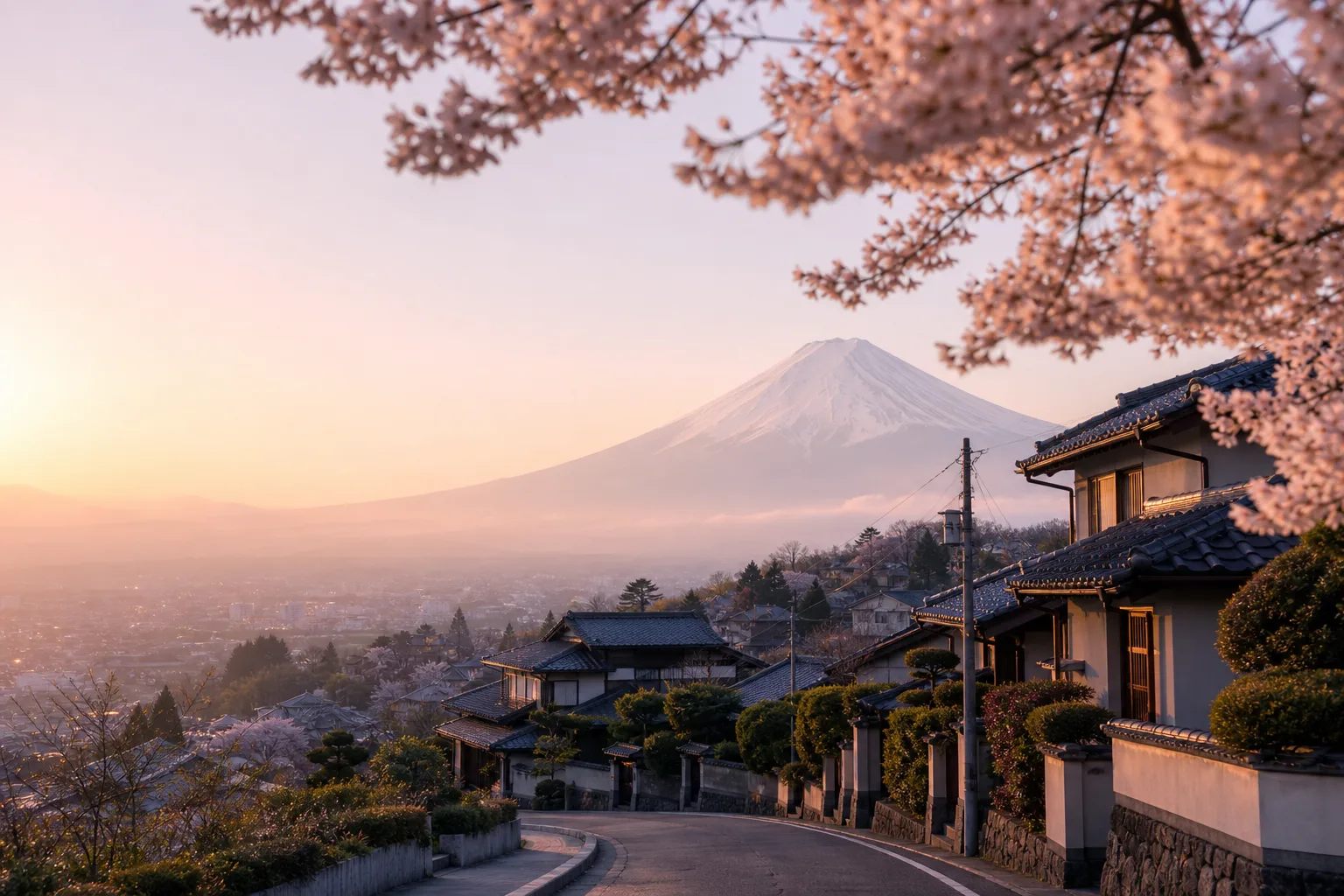
Atami City is a coastal resort town located in eastern Shizuoka Prefecture, situated between the waters of Sagami Bay and surrounding mountains like Jukkoku Pass. Known historically as a premier hot spring destination, it sits within a 40- to 50-minute bullet train ride of central Tokyo.
This physical proximity, combined with a mild climate featuring relatively cool summers and warm winters, makes the area attractive to diverse prospective residents, including remote workers, Tokyo commuters, families, and retirees.
Atami, Shizuoka
The Atami Tradeoff
Sea views and Tokyo access come with terrain, tourism, and very different daily routines by location.
The setting shapes the routine
Atami combines sea views, hot springs, and a fast train connection to Tokyo. Much of the city rises sharply from the coast into the surrounding hills, so a home that appears close to the station on a map may still involve steep roads, stairs, or a car-dependent routine.
Tourism brings energy and congestion
Visitors support Atami's restaurants, shops, events, and active waterfront. On weekends and holidays, traffic around Atami Station and Route 135 can slow buses and make routine errands less convenient.
Choose the version of Atami that fits your life
A walkable condominium near the station, a hillside home with a view, and a villa in a managed subdivision can offer very different daily experiences, costs, and maintenance responsibilities.
Atami, Shizuoka
At a Glance
A coastal resort city where station access and hillside living can feel very different.
Prefecture
Shizuoka Prefecture
Nearest major city
Tokyo, about 40 to 50 minutes by JR Tokaido Shinkansen
Transportation
JR Tokaido Shinkansen, local JR lines, and the Tokai Bus network
Housing
Hillside detached homes, vacant traditional homes, managed villas, and resort condominiums
Car reality
Often useful outside the flatter station area because of steep roads and daily errands.
Atami, Shizuoka
Why Buyers Like This Area
Atami combines a coastal setting with practical links to Tokyo and established local services.
Tokyo access without a Tokyo address
The Shinkansen puts central Tokyo roughly 40 to 50 minutes away, which can suit periodic commuters and remote workers who still need regular access to the capital.
Hot springs as part of daily life
Natural hot springs appear in residential developments, villas, and resort condominiums, with some homes and complexes offering direct access to bath facilities.
A mild coastal climate
The area has relatively warm winters, cooler summers, and local tap water supplied by the surrounding mountain catchment.
Support for families and relocating households
The city offers child medical cost subsidies through high school, childbirth gifts, and relocation assistance aimed at households moving from the greater Tokyo area.
Local medical access
Hospitals, clinics, and dental offices are well represented for a city of Atami's size, including International University of Health and Welfare Atami Hospital.
Atami, Shizuoka
Things to Consider
Terrain, tourism, fees, and hazard exposure can change the ownership experience.
Steep streets affect daily movement
An average incline of 11.4 percent makes cycling impractical in much of the city. Depending on the neighborhood, walking, buses, a scooter, or a car may shape everyday routines.
Weekend traffic can change travel times
Route 135 and the station area can become congested during holidays and busy weekends. Local bus delays may be substantial at peak times.
Location can raise the day-to-day budget
Steep driving can increase fuel use, parking near the station can be limited and expensive, and tourist-oriented dining may cost more than in a typical regional town.
Managed properties come with recurring fees
Resort condominiums and managed villa subdivisions commonly charge monthly maintenance fees of 20,000 to 40,000 JPY for shared facilities, roads, or hot spring infrastructure.
Hazard checks are property-specific
Coastal and hillside locations need careful review against municipal hazard maps for landslide and tsunami risk. Higher inland ground may have solid bedrock, but that does not remove the need for a location-specific check.
Atami, Shizuoka
Housing You'll Find Here
The main choice is often between convenience near town and space higher on the hillsides.
Detached houses and vacant homes
Detached homes range from compact coastal and downtown parcels to wooded hillside lots. The article places the median pre-owned detached-house price at about 22 million JPY. The municipal Akiya Bank may include lower-cost homes for buyers prepared to renovate for long-term use or relocation.
Managed villa subdivisions
Developments such as Atami Shizengo offer forested villa settings, and some plots have private hot spring connections. Regular fees can cover shared roads and communal utilities.
Resort condominiums
Resort condominiums are a major part of Atami's housing stock. Buildings may include communal hot spring baths, pools, and professional building management, with monthly maintenance and administration fees generally ranging from 20,000 to 40,000 JPY.
Lower town and hillside living
Homes closer to the station and waterfront tend to offer smaller lots and easier access to shops. Higher properties can bring more land, privacy, and Sagami Bay views, but often need motorized transport for errands.
Atami, Shizuoka
Everyday Life
Station-area shopping, local services, parks, and healthcare support daily life in town.
Shopping and food
Lusca Atami at the station covers groceries, daily goods, and local food. Heiwa-dori, Nakamise-dori, and Atami Ginza add dried fish shops, produce, casual restaurants, and cafes. MaxValu stores serve different parts of the city.
Parks and outdoor time
Atami Sun Beach and the nearby waterfront paths provide an easy seaside walk. Atami Baien is known for plum blossoms and fall foliage, while Acao Forest has twelve hillside gardens overlooking the ocean.
Family life and education
The city has public elementary and junior high schools, Shizuoka Prefectural Atami High School, nursery schools, and certified child centers.
Healthcare
Atami has a relatively high concentration of hospitals, clinics, and dental offices, with comprehensive care and emergency services available through facilities including International University of Health and Welfare Atami Hospital.
Atami, Shizuoka
Getting Around
Rail access is strong, but local mobility depends heavily on the property's elevation and road access.
Regional travel
JR Atami Station connects to Tokyo Station by the Tokaido Shinkansen in about 40 to 50 minutes. Local JR lines also run north toward Kanagawa and south along the Izu Peninsula.
The station area and lower town
A well-located home in the flatter downtown core can work for short stays or daily life on foot, by bus, and by train. This is the part of Atami where car-free routines are most realistic.
Hillside neighborhoods
Higher neighborhoods often make a private car or motor scooter more practical. Tokai Bus covers key areas, but congestion on Route 135 can cause long delays during holiday periods.
Driving and parking
Driving can make access to hillside homes and nearby regions easier outside peak tourism periods. Buyers should check parking availability and cost, especially near the station, and account for steep grades and narrow roads.
Atami, Shizuoka
Lifestyle and Local Character
Hot springs, waterfront events, shrines, and seasonal gardens shape the rhythm of the city.
A year-round fireworks calendar
The Atami Sea Fireworks Display takes place more than ten times a year. It can be watched from waterfront parks, coastal promenades, and some hillside homes.
Shrines and seasonal festivals
Kinomiya Shrine, with its 2,000-year-old camphor tree, is an important local gathering place. The Atami Kogashi Festival brings float parades to the streets in July, while the Itokawa cherry blossom festival runs from January into February.
Weekends close to home
Residents can walk Atami Sun Beach, hike Jukkoku Pass, visit Atami Baien or Acao Forest, and eat fresh seafood around Atami Ginza without leaving the city.
Bath culture remains part of the routine
Hot spring bathing is woven into local life through public baths, bathhouses, private connections, and facilities in some residential developments.
Atami, Shizuoka
Who This Area Is Best For
Atami suits buyers who value the coast and Tokyo access, and who can choose their location carefully.
A good fit if you...
Want Shinkansen access to Tokyo alongside a coastal setting.
Value hot springs, seaside parks, and frequent fireworks displays.
Are open to detached homes, vacant homes, villas, or resort condominiums.
Expect to work remotely or travel to Tokyo periodically.
Prefer mild winters and a slower resort-town rhythm.
You may prefer another area if you...
Need to rely on a bicycle for regular errands.
Want to avoid tourist traffic and busy holiday periods.
Want low-maintenance housing without condo or subdivision fees.
Prefer a flat, dense urban grid with extensive indoor shopping.
Find narrow, steep roads stressful to drive.
A Coastal Base Within Easy Reach of Tokyo
Atami offers a distinctive lifestyle that combines high-speed connectivity to Tokyo with the everyday relaxation of a historic hot spring resort town. Its dramatic coastal landscape, comprehensive medical infrastructure, and varied housing options make it a practical destination for remote professionals, families, and retirees alike.
If living along the shores of Sagami Bay with daily access to hot springs and immediate rail links to the capital matches your long-term goals, exploring current housing listings in Atami is a logical next step. Reviewing property locations against local terrain, hazard maps, and daily transit needs will help you find a home that fits your lifestyle.
Ready to explore?
👉 How to Find Your Dream Property in Japan: Learn how to explore regions, compare value, and confidently discover standout homes using AkiyaHub’s most powerful search approach.
👉 Join the AkiyaHub community: Learn from real buyers, ask questions freely, and move forward with confidence as you explore owning a home in Japan.


 AkiyaHub Team