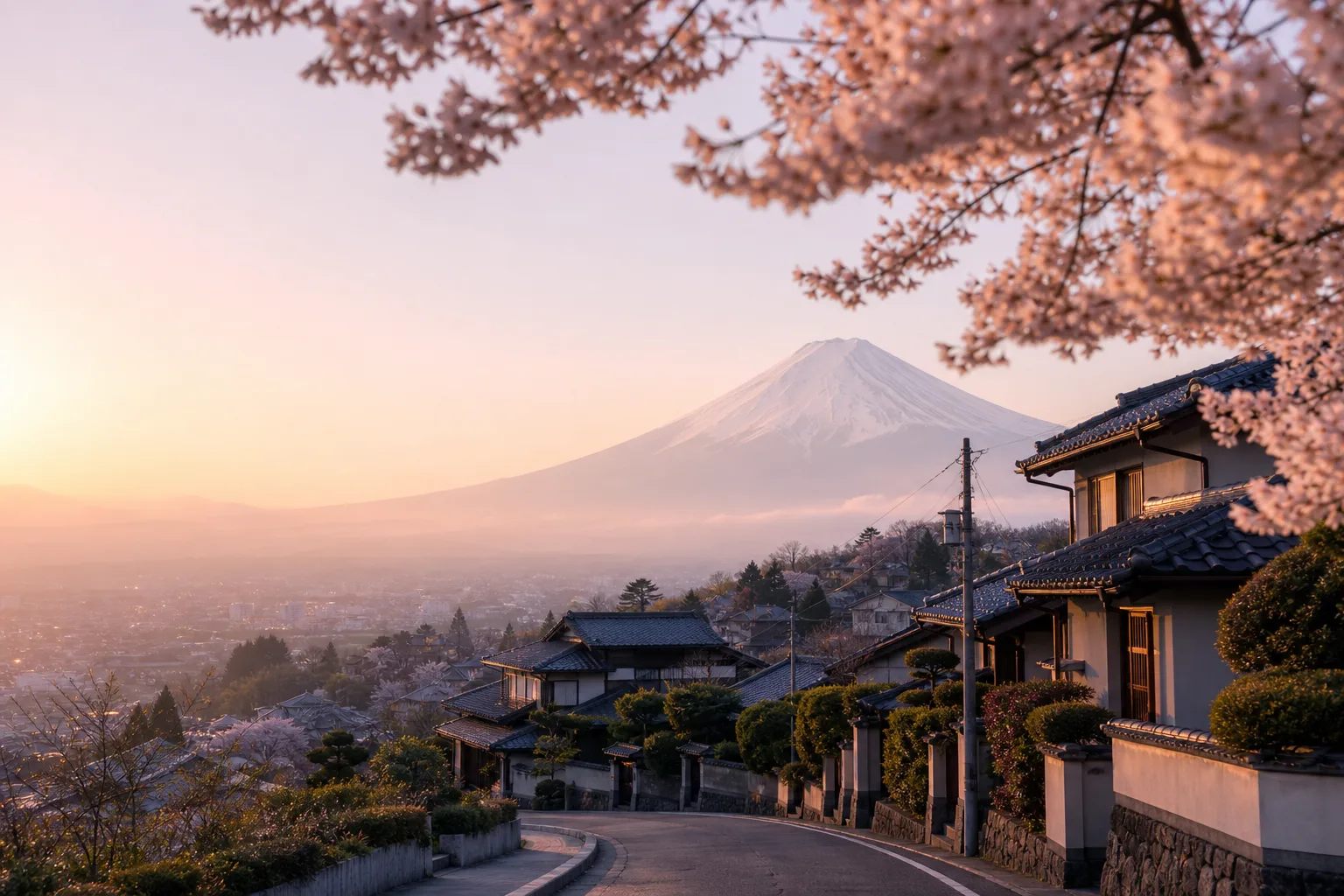
Saitama City, the prefectural capital of Saitama with a population of approximately 1.36 million residents, serves as a major commercial and transportation hub situated directly north of Tokyo. The city balances vibrant, high-density transit nodes with quiet residential neighborhoods, cultural landmarks, and agricultural greenbelts. It consistently records high resident satisfaction and attracts a steady influx of families drawn to its urban conveniences and suburban space.
SAITAMA CITY, SAITAMA
The Saitama City Tradeoff
The right ward depends on how you balance Tokyo access, daily convenience, space, and pace of life.
Central wards: access and convenience
Omiya and Urawa put major rail connections, shopping, dining, and established residential streets close at hand. They suit buyers who want an active city base and a practical route into Tokyo, but station areas are denser, busier, and generally more expensive.
Outer wards: more room, more planning
Nishi, Minuma, Midori, and Iwatsuki offer lower-density neighborhoods, larger lots, detached homes, and more secondhand or vacant properties. The tradeoff is that everyday errands, rail access, and travel across the city may require more reliance on buses or a car.
Questions to answer before you search
Do you want to be within walking distance of a major station, or is more space worth a longer local trip?
Will you commute regularly to Tokyo, make occasional regional trips, or mainly use the home as a local base?
Do you need parking, a private yard, or renovation potential that may be easier to find in an outer ward?
SAITAMA CITY, SAITAMA
At a glance
A major city north of Tokyo, with station-centered convenience and more spacious outer wards.
Prefecture
Saitama Prefecture
Tokyo access
Tokyo is about 30 minutes away by train from key stations.
Transportation
Multiple JR lines and several Shinkansen lines meet at Omiya Station.
Typical housing
Condominiums near stations, detached homes in residential wards, and renovation properties farther out.
Car use
Optional near major stations. More useful for daily life in outer suburban wards.
SAITAMA CITY, SAITAMA
Why buyers like this area
Tokyo access, complete daily services, and more room for family life can sit in the same plan.
A workable Tokyo commute
Direct services reach Tokyo Station and Shinjuku Station in about 30 minutes, which can suit buyers who want access to central Tokyo without living in its densest wards.
Daily needs close to home
Omiya, Urawa, and Saitama-Shintoshin have substantial shopping, dining, and entertainment. Cocoon City near Saitama-Shintoshin Station is one example.
Family-oriented services
Municipal education initiatives, child-raising support centers, public parks, and neighborhood services give families practical reasons to consider the city.
Green space and weekend options
The Minuma Rice Paddock greenbelt, city parks, soccer culture, and events at Saitama Super Arena add outdoor and cultural options beyond the commuter routine.
SAITAMA CITY, SAITAMA
Things to consider
Convenience, price, and daily movement change noticeably from one ward to the next.
East-west driving can be slow
Cross-city road travel can face bottlenecks at major intersections, rail overpasses, and the limited network of east-west routes.
Station convenience carries a premium
Homes near central stations tend to cost more. More affordable outer wards may require greater use of buses or a car.
Central hubs are busier
Omiya and other major station areas bring nightlife, commercial noise, and crowded peak-hour trains alongside their convenience.
Check the immediate setting
The city is broadly flat, but slopes near valley edges and overpasses can matter for cycling. Amenities and municipal infrastructure also vary by district.
SAITAMA CITY, SAITAMA
Housing you'll find here
The main choice is usually between station access, lot size, property condition, and maintenance needs.
Near major stations
Omiya, Urawa, and Saitama-Shintoshin
High-rise and mid-rise condominiums are common. They suit buyers who value modern amenities, lower maintenance, and a short walk to rail and shopping.
Established residential districts
Urawa and Musashi-Urawa
Detached homes become more common, including newer prefabricated houses and older timber-frame homes on compact lots. Parking may be limited to one small space.
Outer suburban wards
Nishi, Minuma, Midori, and Iwatsuki
Lots are generally larger, detached homes are more common, and buyers are more likely to find secondhand homes and akiya. Private parking and garden space are easier to find here.
SAITAMA CITY, SAITAMA
Everyday life
Daily errands can be easy near local stations, with larger hubs handling bigger shopping and leisure trips.
Shopping and errands
Cocoon City and other large shopping centers cover major retail needs. Supermarkets, convenience stores, pharmacies, and smaller commercial streets support everyday routines around local stations and residential roads.
Food and family life
Dining ranges from station-side casual restaurants to neighborhood cafes and bakeries. Child-raising centers, schools, and public services are distributed across the city's ten wards, with Urawa and Musashi-Urawa known for their concentration of educational institutions.
Health, parks, and civic amenities
Local clinics, general hospitals, libraries, sports centers, swimming facilities, and community halls are part of the city's regular service network. Omiya Park adds walking paths, lawns, cherry trees, and a small zoo.
SAITAMA CITY, SAITAMA
Getting around
Rail can work very well near key stations. Outer neighborhoods give a car more practical value.
Regional and Tokyo travel
Omiya is the main hub, with the Keihin-Tohoku, Saikyo, Utsunomiya, Takasaki, and Shonan-Shinjuku lines, plus several Shinkansen routes. Key Tokyo destinations are about 30 minutes away by express rail services.
Local daily movement
A home within a 10 to 15 minute walk of a major JR station can support daily life without a car. In Minuma, Nishi, and Iwatsuki, longer distances to rail make a car more useful for errands and family transport.
SAITAMA CITY, SAITAMA
Lifestyle and local character
Historic sites, green corridors, sports, and large events give the city more than a commuter identity.
History and craft
Musashi Ichinomiya Hikawa Shrine, Iwatsuki Castle Park, and Omiya Bonsai Village connect daily city life with local history and bonsai culture.
Seasonal rhythm and green space
The Omiya Summer Festival, Urawa Festival, and Yono Park Rose Festival create recurring local events. The Minuma Rice Paddock and Tajimagahara in Sakuraso Park offer agricultural scenery, walking routes, and seasonal nature.
Sports and entertainment
Urawa Reds matches, concerts and athletic events at Saitama Super Arena, and the Railway Museum give residents options for a more active weekend close to home.
SAITAMA CITY, SAITAMA
Who this area is best for
The fit depends on whether Tokyo access and city services matter more than uniform walkability or rural quiet.
A good fit if you...
Want a direct Tokyo commute while living outside the central wards.
Expect to use Shinkansen services for travel around eastern Japan.
Value schools, parks, shopping, and family services close to home.
Want a detached home, parking, or renovation potential in an outer ward.
You may prefer another area if you...
Need to drive across town often and want to avoid east-west congestion.
Want dense amenities within walking distance in every neighborhood.
Prefer a fully rural setting away from major transit and commercial hubs.
Want low-density quiet within a short walk of a major Shinkansen station.
A Connected Base North of Tokyo
Saitama City offers a practical blend of high-speed regional transit, comprehensive commercial centers, and family-oriented suburban neighborhoods. Its direct rail access to central Tokyo, paired with expansive municipal parks and specialized educational initiatives, makes it an attractive destination for international buyers seeking suburban comfort without sacrificing metropolitan convenience.
Whether you prefer a low-maintenance condominium near a major express train station or a detached single-family home with parking in a quieter outer ward, Saitama City accommodates a wide range of lifestyle preferences. Exploring available homes and neighborhood options across the city's distinct wards will help you determine if this well-connected regional hub fits your long-term living plans.
Ready to explore?
👉 How to Find Your Dream Property in Japan: Learn how to explore regions, compare value, and confidently discover standout homes using AkiyaHub’s most powerful search approach.
👉 Join the AkiyaHub community: Learn from real buyers, ask questions freely, and move forward with confidence as you explore owning a home in Japan.


 AkiyaHub Team