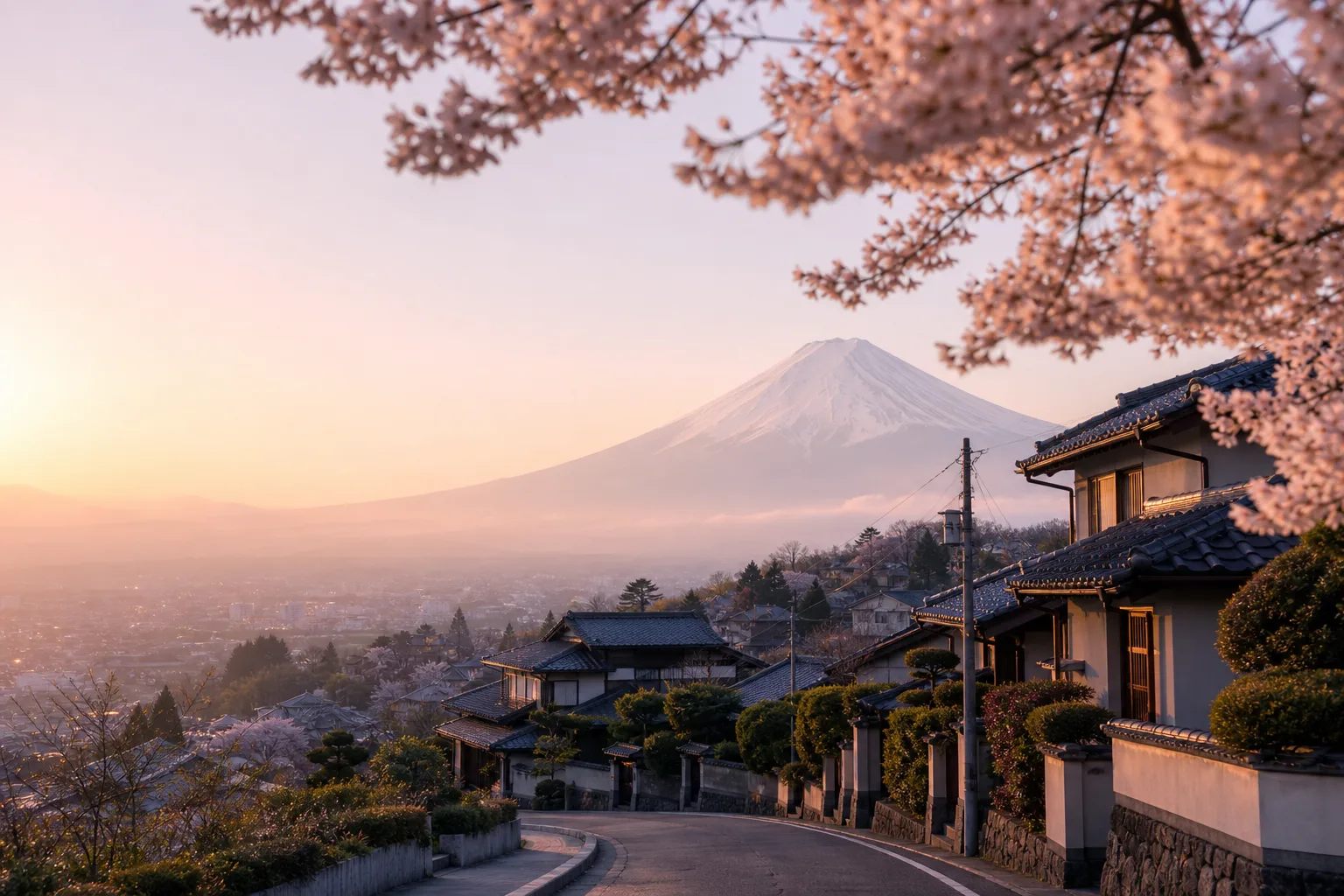
Located on the Miura Peninsula in Kanagawa Prefecture, Yokosuka is a coastal city of roughly 388,000 residents bordered by the sea on three sides and framed by forested hills. The city offers a distinct living environment shaped by its maritime geography and an international local culture influenced by the presence of a major U.S. naval base.
Yokosuka provides a practical option for buyers who want proximity to major urban employment hubs while residing in a coastal environment.
Yokosuka, Kanagawa
The Yokosuka Tradeoff
The city can offer coastal space and regional access, but daily convenience changes sharply by neighborhood.
What you gain
Coastal living without losing contact with the city
Yokohama is about 25 minutes away by express train, while Shinagawa is roughly 45 minutes away. That gives buyers access to major employment and commercial centers while living in a city shaped by the coast, harbor, hills, and outdoor space.
What changes by location
A station-area home and a hillside home can mean very different routines
Near major stations, buyers may find flatter streets, rail access, shopping, and condominium living. Inland valleys and hillside neighborhoods can offer more detached-home space and lower entry costs, but may also involve narrow roads, stairs, longer bus trips, and a greater need for a car.
The buyer question
Decide which kind of convenience matters most
Before narrowing your search, decide whether you value a short walk to rail and daily services, or whether you are willing to trade some convenience for more space, a detached home, or a quieter coastal setting.
Yokosuka, Kanagawa
At a Glance
A coastal commuter city where the right neighborhood matters as much as the city itself.
Prefecture
Kanagawa Prefecture
Nearest major cities
Yokohama is about 25 minutes by train. Shinagawa is about 45 minutes away.
Transportation
The Keikyu Main Line and JR Yokosuka Line provide direct rail service, supported by local bus routes.
Housing
Station-area condominiums, detached suburban homes, and hillside akiya are all part of the local mix.
Car reality
A car is often unnecessary near flat station areas. It becomes much more useful in elevated, inland, and hillside neighborhoods.
Defining feature
A hilly coastline and naval harbor create sharp differences between urban corridors, flat station districts, and steep residential valleys.
Yokosuka, Kanagawa
Why Buyers Like This Area
Lower entry costs and coastal living, with direct links to Yokohama and Tokyo.
More room for the budget
Lower housing costs than nearby coastal alternatives
Compared with Zushi and nearby Yokohama districts, buyers may find more scope for a detached home, a larger property, or private yard space.
Regional access
Direct express connections for regular city trips
Keikyu services put Yokohama within roughly 25 minutes and Shinagawa within about 45 minutes for buyers who value access to larger employment and commercial centers.
Outdoor space
Coast, parks, and hiking close to home
Waterfront promenades, seaside parks, and nearby hiking give the city a more outdoors-oriented rhythm than many commuter suburbs.
Family practicality
Municipal support for long-term residents
The article notes free medical care for children through high school graduation and childbirth subsidies, which may matter to families planning to establish roots locally.
Food and daily routine
Miura Peninsula produce and seafood nearby
Direct markets and local ports give residents access to seasonal produce and seafood without relying only on standard suburban supermarkets.
Yokosuka, Kanagawa
Things to Consider
Terrain, access, and coastal conditions can change the day-to-day experience of a property.
Steep slopes and stair-only access
Some hillside and valley homes sit behind long staircases or narrow roads. This can make daily walking harder and may prevent a vehicle from reaching the front door.
Salt air and humidity
Coastal exposure can increase rust and moisture-related maintenance for buildings, bicycles, and vehicles.
Weekend road congestion
Main roads and highway exits can slow down on weekends and holidays as traffic continues south toward the Miura Peninsula.
Hazard exposure varies by site
Low-lying coastal areas may face tsunami and high-tide risk. Some steep interior slopes are designated as landslide warning zones during heavy rain.
Bus service is not equal everywhere
Buses reach many elevated neighborhoods, but frequencies can fall outside peak times. A property’s walk to the stop and the actual timetable deserve close attention.
Yokosuka, Kanagawa
Housing You'll Find Here
Housing type, access, and renovation needs often change as you move away from the stations.
Near major stations
Condominiums and easier daily access
Around Yokosuka-chuo, Kurihama, and Oppama, high-rise and mid-rise condominiums suit buyers who prioritize flat streets, step-free rail access, and nearby shopping.
Hillsides and yato valleys
Detached homes with more variation in lot and access
Away from the station areas, detached homes are more common. Inland and elevated neighborhoods can offer larger lots than central Yokohama or Tokyo, but the terrain is part of the decision.
Vacant homes and renovation projects
Lower purchase prices can come with practical constraints
The citywide vacancy rate is described as around 14 to 15 percent. Many older akiya are in stair-access or narrow-path locations where car access is not possible, making condition and logistics especially important.
Municipal program
Vacant Home Bank support for eligible family purchases
Yokosuka’s Vacant Home Bank includes subsidies of up to ¥500,000 for child-rearing families purchasing and renovating vacant homes, subject to the program’s requirements.
Yokosuka, Kanagawa
Everyday Life
Daily errands are easiest near the city’s rail corridors and established commercial centers.
Shopping and household errands
Coaska Bayside Stores and Yokosuka More's City serve the waterfront and Yokosuka-chuo areas. Kurihama, Kinugasa, and Heiseicho add grocery stores, home centers, and neighborhood shopping streets.
Food and local dining
Sukanagosso and fish stalls at Nagai Port are part of the local fresh-food routine. Dobuita Street adds cafes, American-style diners, Yokosuka Navy Curry, Navy Burgers, and international shops.
Schools and healthcare
The city has 44 primary schools, 23 junior high schools, multiple high schools, and institutions including the Kanagawa University of Human Services and the National Defense Academy. Major hospitals include Yokosuka Kyosai Hospital and Yokosuka City General Medical Center.
Parks and weekend routines
Verny Park, Umikaze Park, and Kurihama Flower Park provide waterfront walks, lawns, sports areas, seasonal flowers, and space for family outings.
Yokosuka, Kanagawa
Getting Around
Rail works well near the right station. Hillside access can change the equation quickly.
Regional travel
Rail is the strongest option near station areas
The Keikyu Main Line reaches Yokohama in about 25 minutes and Shinagawa in about 45 minutes on limited express services. The JR Yokosuka Line also provides direct service to Tokyo Station.
Local daily movement
Topography determines whether a car adds real value
Flat neighborhoods near stations can work well without a car. In elevated districts, internal valleys, and areas such as Shonan Kokusai Mura, driving may be strongly recommended for groceries and daily trips.
Bus, bicycle, and driving reality
Check the route, not just the nearest pin on a map
Keikyu Bus serves inland areas, but frequencies can drop outside peak hours and road delays affect journeys. Hillside roads can be narrow, parking is generally ¥10,000 to ¥20,000 per month, and cycling is most practical in flatter coastal areas such as Heiseicho.
Yokosuka, Kanagawa
Lifestyle and Local Character
Naval history, harbor life, and coastal outings give Yokosuka a character unlike a typical commuter suburb.
A working harbor with international influence
Yokosuka’s identity is tied to its naval history, including Uraga, the Verny shipyard, and the continuing presence of Japanese Maritime Self-Defense Force and U.S. Navy installations around the harbor.
A coastal weekend close to home
Residents can walk through Verny Park, visit the battleship Mikasa at Mikasa Park, take the ferry to Sarushima, or head to Kannonzaki Lighthouse and the Yokosuka Museum of Art for views across Tokyo Bay.
Seasonal local rhythm
The Kanrin Maru Festival in Uraga, the Bamboo Lantern Festival, the Yokosuka Kaikoku Fireworks Competition, and occasional military-base open-house events add recurring local occasions throughout the year.
Yokosuka, Kanagawa
Who This Area Is Best For
A good match for buyers who accept terrain as part of the tradeoff for coast, character, and relative value.
A good fit if you...
Want direct rail access to Yokohama and central Tokyo while paying less than in nearby coastal municipalities.
Enjoy coastal parks, harbor views, and local hiking as part of everyday life.
Value family support such as medical coverage for children through age eighteen.
Like a place shaped by maritime history, naval culture, and international influences.
Are open to a detached home or an akiya renovation project with lower entry costs.
You may prefer another area if you...
Need flat, step-free routes to transit, shops, and daily services.
Plan to rely only on walking or cycling and do not want to use hillside bus routes.
Would rather avoid salt-air maintenance and higher coastal humidity.
Prefer a newer, more uniform suburban development over older and topographically varied neighborhoods.
Want to avoid weekend traffic on roads leading toward the southern Miura Peninsula.
A Coastal Base Within Reach of Tokyo
Yokosuka offers a compelling mix of coastal geography, rich naval history, and practical commuter connectivity to major commercial hubs in Kanagawa and Tokyo. Its diverse terrain creates distinct residential choices, ranging from convenient transit-focused apartments near central stations to affordable single-family homes tucked into quiet hillside valleys. While the area's topographically varied landscape and coastal environment require specific lifestyle considerations, its expansive public parks, lower housing entry costs, and strong municipal family support make it a practical option for many home buyers.
If Yokosuka's balance of coastal outdoor access, regional connectivity, and distinct local character aligns with your housing goals, exploring available properties and municipal renovation programs can help you determine whether this naval port city suits your lifestyle.
Ready to explore?
👉 How to Find Your Dream Property in Japan: Learn how to explore regions, compare value, and confidently discover standout homes using AkiyaHub’s most powerful search approach.
👉 Join the AkiyaHub community: Learn from real buyers, ask questions freely, and move forward with confidence as you explore owning a home in Japan.
Your next step · about 2 minutes
You know Kanagawa now. See how it compares for your budget.
Answer 11 quick questions. Your free Snapshot compares Kanagawa with every other area your budget can reach, shows how many listings match today, and what to adjust to unlock more options.


 AkiyaHub Team